
Navigation
SEARCH WHAT YOU WANT

Choosing the best disposable razor for sensitive skin is not only about price or blade count. Blade quality, lubrication, razor-head design, handle control, and shaving technique can all affect skin comfort.
Sensitive skin may react more easily to friction, repeated shaving strokes, and excessive pressure. A suitable disposable razor should remove hair efficiently while allowing the user to shave with light, controlled movements.
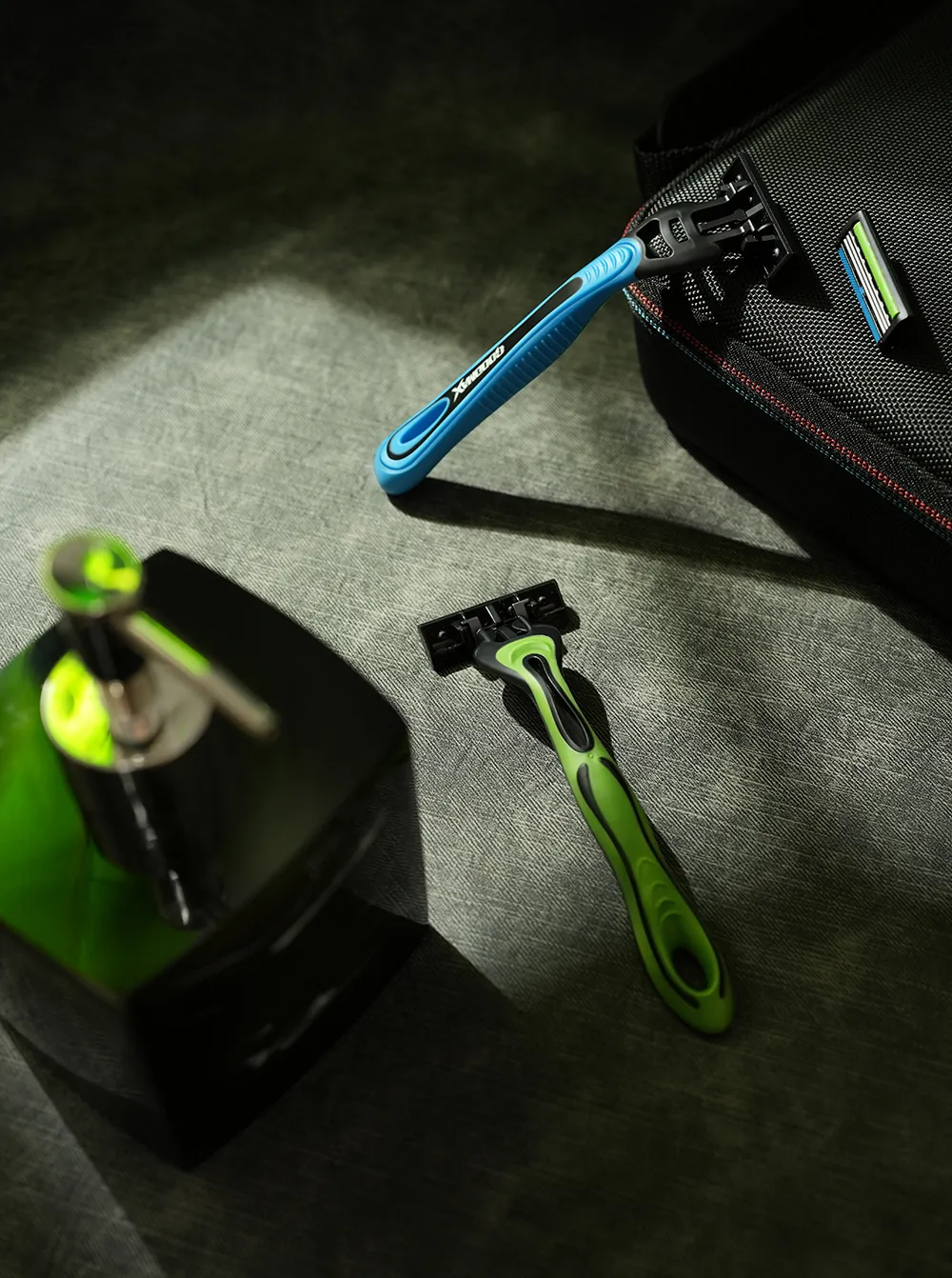
Blade quality is one of the most important factors when selecting a disposable razor for sensitive skin.
A sharp blade cuts hair smoothly and requires less pressure. A dull or poorly aligned blade may pull the hair, forcing the user to shave the same area several times. This increases friction and may cause redness, razor burn, or discomfort.
Stainless steel blades are commonly used because they provide good sharpness, durability, and corrosion resistance. However, buyers should also consider blade alignment, spacing, grinding quality, and blade exposure.
A well-manufactured twin-blade razor may provide a better shaving experience than a low-quality multi-blade razor.
More blades are not always better for sensitive skin.
Multi-blade razors can remove hair efficiently and may reduce the number of shaving strokes. However, additional blades also increase the amount of contact with the skin.
Single- or twin-blade razors may offer more control for users who often experience razor bumps or irritation. Triple-blade razors provide a balance between shaving efficiency and skin contact, while five- or six-blade razors are usually designed for a closer shave.
The best blade count depends on hair thickness, shaving area, skin condition, and personal shaving habits.
A lubricating strip helps reduce friction between the razor and the skin.
When activated by water, it helps the razor glide more smoothly and reduces the need to apply excessive pressure. Common ingredients include aloe vera, vitamin E, plant-based oils, and water-soluble lubricating materials.
However, the lubricating strip should not replace shaving cream or shaving gel. People with known skin sensitivities should also check the ingredients used in the strip.
For private-label disposable razors, the strip formula, color, and size can often be customized according to the target market.
A pivoting razor head can follow facial and body contours more easily.
This is especially useful when shaving curved areas such as the jawline, neck, underarms, knees, ankles, and bikini line. A flexible head helps maintain more even contact and reduces the need to press the razor heavily against the skin.
An open-back or easy-rinse cartridge is also useful. It allows water to flow through the rear of the razor head, helping remove trapped hair and shaving products.
A clogged cartridge may require more pressure or repeated strokes, which can make sensitive skin uncomfortable.
A well-designed handle improves shaving control, especially when used with wet hands.
A slippery or poorly balanced handle may cause the user to grip too tightly and apply more pressure than necessary.
Useful handle features include:
● Textured or rubber grip areas
● An ergonomic shape
● Finger support near the razor head
● Balanced weight and comfortable length
For sensitive skin, stable control is often more important than decorative appearance.
The right razor is important, but shaving preparation and technique also affect the result.
First, soften the hair with warm water. Shaving during or near the end of a warm shower can make the hair easier to cut.
Apply shaving cream or gel to create a protective layer between the blade and the skin. Use light, short strokes and avoid pressing the razor heavily.
Shaving in the direction of hair growth may help reduce razor bumps and irritation. Rinse the cartridge regularly to prevent hair and shaving products from collecting between the blades.
After shaving, rinse the skin and gently pat it dry. A mild, fragrance-free moisturizer may help reduce dryness.
There is no fixed replacement schedule for every user. Razor life depends on shaving frequency, hair thickness, blade quality, shaving area, and storage conditions.
Replace the razor when:
● It begins pulling the hair
● More pressure is required
● Several passes are needed
● The blades feel rough
● The cartridge is difficult to rinse
● The blades show damage or corrosion
● The lubricating strip is significantly worn
Continuing to use a dull razor may increase friction and reduce shaving comfort.
GOODMAX is a professional razor manufacturer providing disposable razor solutions for brands, retailers, importers, and distributors.
Our disposable razor range includes different blade counts, handle designs, lubricating strips, pivoting heads, and open-back cartridges for men’s and women’s shaving products.
Available customization options include:
● Blade count
● Handle color
● Rubber grip
● Logo printing
● Lubricating strip
● Product combination
● Retail packaging
With in-house mold development, automated production equipment, and quality-control procedures, GOODMAX supports OEM and private-label razor projects for different markets and price levels.
A suitable razor should have sharp, consistently aligned blades, good lubrication, a comfortable handle, and a head design that allows shaving with light pressure.
Not necessarily. More blades may improve shaving efficiency, but they also increase blade contact with the skin. Blade quality, lubrication, and shaving technique are equally important.
A twin-blade razor can provide a practical balance between hair removal efficiency and limited blade contact. Performance still depends on blade sharpness, alignment, and lubrication.
Replace it when the blade begins pulling hair, feels rough, requires more pressure, or no longer rinses cleanly.
The best disposable razor for sensitive skin should combine sharp blades, effective lubrication, a flexible razor head, easy rinsing, and good handle control.
Rather than choosing a razor based only on price or blade count, users and buyers should consider the complete product design and shaving performance.
Choosing the best disposable razor for sensitive skin is not only about price or blade count. Blade quality, lubrication, razor-head design, handle control, and shaving technique can all affect skin comfort.
Sensitive skin may react more easily to friction, repeated shaving strokes, and excessive pressure. A suitable disposable razor should remove hair efficiently while allowing the user to shave with light, controlled movements.
Blade quality is one of the most important factors when selecting a disposable razor for sensitive skin.
A sharp blade cuts hair smoothly and requires less pressure. A dull or poorly aligned blade may pull the hair, forcing the user to shave the same area several times. This increases friction and may cause redness, razor burn, or discomfort.
Stainless steel blades are commonly used because they provide good sharpness, durability, and corrosion resistance. However, buyers should also consider blade alignment, spacing, grinding quality, and blade exposure.
A well-manufactured twin-blade razor may provide a better shaving experience than a low-quality multi-blade razor.
More blades are not always better for sensitive skin.
Multi-blade razors can remove hair efficiently and may reduce the number of shaving strokes. However, additional blades also increase the amount of contact with the skin.
Single- or twin-blade razors may offer more control for users who often experience razor bumps or irritation. Triple-blade razors provide a balance between shaving efficiency and skin contact, while five- or six-blade razors are usually designed for a closer shave.
The best blade count depends on hair thickness, shaving area, skin condition, and personal shaving habits.
A lubricating strip helps reduce friction between the razor and the skin.
When activated by water, it helps the razor glide more smoothly and reduces the need to apply excessive pressure. Common ingredients include aloe vera, vitamin E, plant-based oils, and water-soluble lubricating materials.
However, the lubricating strip should not replace shaving cream or shaving gel. People with known skin sensitivities should also check the ingredients used in the strip.
For private-label disposable razors, the strip formula, color, and size can often be customized according to the target market.
A pivoting razor head can follow facial and body contours more easily.
This is especially useful when shaving curved areas such as the jawline, neck, underarms, knees, ankles, and bikini line. A flexible head helps maintain more even contact and reduces the need to press the razor heavily against the skin.
An open-back or easy-rinse cartridge is also useful. It allows water to flow through the rear of the razor head, helping remove trapped hair and shaving products.
A clogged cartridge may require more pressure or repeated strokes, which can make sensitive skin uncomfortable.
A well-designed handle improves shaving control, especially when used with wet hands.
A slippery or poorly balanced handle may cause the user to grip too tightly and apply more pressure than necessary.
Useful handle features include:
● Textured or rubber grip areas
● An ergonomic shape
● Finger support near the razor head
● Balanced weight and comfortable length
For sensitive skin, stable control is often more important than decorative appearance.
The right razor is important, but shaving preparation and technique also affect the result.
First, soften the hair with warm water. Shaving during or near the end of a warm shower can make the hair easier to cut.
Apply shaving cream or gel to create a protective layer between the blade and the skin. Use light, short strokes and avoid pressing the razor heavily.
Shaving in the direction of hair growth may help reduce razor bumps and irritation. Rinse the cartridge regularly to prevent hair and shaving products from collecting between the blades.
After shaving, rinse the skin and gently pat it dry. A mild, fragrance-free moisturizer may help reduce dryness.
There is no fixed replacement schedule for every user. Razor life depends on shaving frequency, hair thickness, blade quality, shaving area, and storage conditions.
Replace the razor when:
● It begins pulling the hair
● More pressure is required
● Several passes are needed
● The blades feel rough
● The cartridge is difficult to rinse
● The blades show damage or corrosion
● The lubricating strip is significantly worn
Continuing to use a dull razor may increase friction and reduce shaving comfort.
GOODMAX is a professional razor manufacturer providing disposable razor solutions for brands, retailers, importers, and distributors.
Our disposable razor range includes different blade counts, handle designs, lubricating strips, pivoting heads, and open-back cartridges for men’s and women’s shaving products.
Available customization options include:
● Blade count
● Handle color
● Rubber grip
● Logo printing
● Lubricating strip
● Product combination
● Retail packaging
With in-house mold development, automated production equipment, and quality-control procedures, GOODMAX supports OEM and private-label razor projects for different markets and price levels.
A suitable razor should have sharp, consistently aligned blades, good lubrication, a comfortable handle, and a head design that allows shaving with light pressure.
Not necessarily. More blades may improve shaving efficiency, but they also increase blade contact with the skin. Blade quality, lubrication, and shaving technique are equally important.
A twin-blade razor can provide a practical balance between hair removal efficiency and limited blade contact. Performance still depends on blade sharpness, alignment, and lubrication.
Replace it when the blade begins pulling hair, feels rough, requires more pressure, or no longer rinses cleanly.
The best disposable razor for sensitive skin should combine sharp blades, effective lubrication, a flexible razor head, easy rinsing, and good handle control.
Rather than choosing a razor based only on price or blade count, users and buyers should consider the complete product design and shaving performance.
Navigation
Products
Copyright © 2025 Ningbo Jiali Century Group Co.,Ltd. Powered by iglobalwin.com